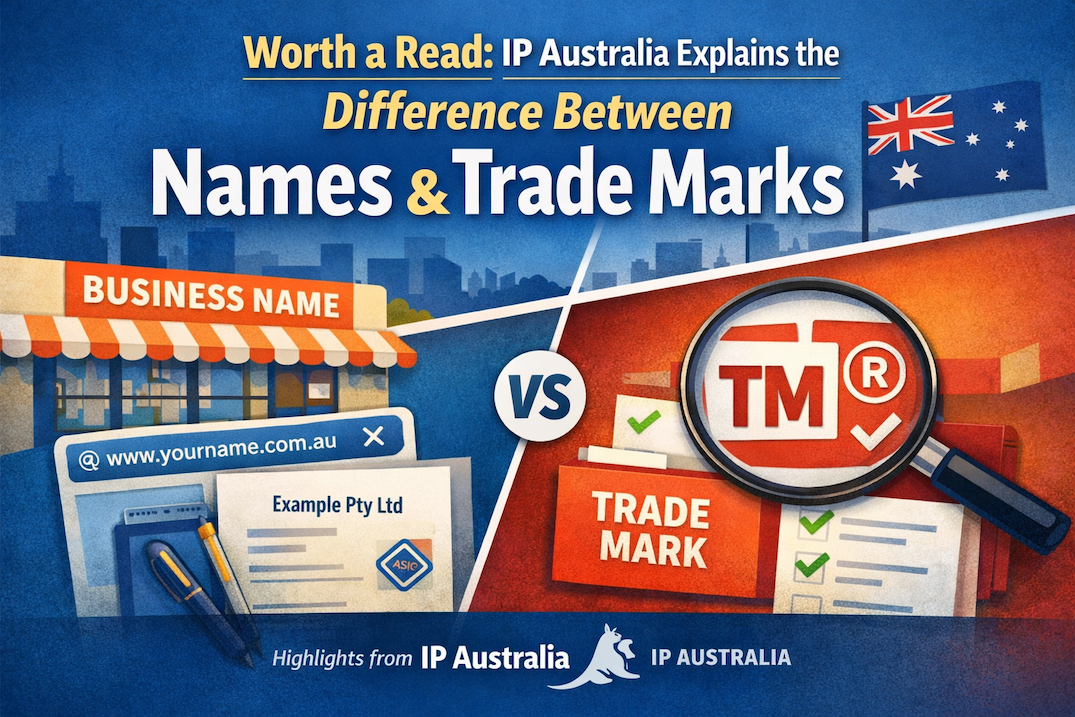
If you run an Australian business and have ever wondered “What exactly does my business name protect?” — this one’s for you.
This week, IP Australia published a clear and practical article titled “A simple breakdown of names and trade marks”, aimed at reducing the confusion that often leads to accidental IP disputes.
At qrco.au, we regularly see businesses get caught out by misunderstandings around names, domains, and trade marks — so we wanted to highlight this article and share the key takeaways our customers should know.
🔗 Original article: https://ipfirstresponse.ipaustralia.gov.au/blogs/simple-breakdown-names-and-trade-marks
Why IP Australia Wrote This Article
According to IP Australia, many IP disputes start not because of bad intent, but because business owners confuse different registers and approvals — such as:
- Company names
- Business names
- Domain names
- Trade marks
The article walks through what each one does and, just as importantly, what each one does not do.
Key Points We Want qrco.au Customers to Notice
Here are the most important clarifications highlighted in the IP Australia article — with real-world relevance for Australian businesses.
1. A legal or company name is not brand protection
Registering a company or operating under your personal name simply identifies who is legally responsible. It does not give exclusive rights to use that name as a brand.
2. A business name only lets you trade publicly
Business names are registered so the public can see who is behind a trading name. ASIC checks for identical names — not trade mark conflicts.
This means:
- You can legally register a business name
- And still infringe someone else’s trade mark without realising it
3. Owning a .au domain doesn’t mean you own the name
The article clearly explains that Australian domain names are licences, not ownership rights. Domains can be lost in disputes, particularly where a registered trade mark exists.
4. Trade marks are the only true form of brand protection
A registered trade mark gives you enforceable rights to stop others using confusingly similar names, logos, or branding — for the goods and services you nominate.
This is the protection that prevents:
- Copycat branding
- Customer confusion
- Costly enforcement disputes later on
Common Misunderstandings IP Australia Sees
IP Australia also lists frequent assumptions that cause problems, including:
- “We’ve used the name for years, so it’s protected”
- “ASIC approved our name, so no one else can use it”
- “We own the domain, so we own the brand”
- “Registering a logo protects the words automatically”
- “Australian trade marks protect us overseas”
This IP Australia article does a great job of:
- Explaining the system in plain English
- Showing why administrative registrations ≠ IP rights
- Encouraging businesses to think about protection early
If you’re choosing a name, launching a brand, or scaling a business, this is essential reading.
📌 We strongly recommend reviewing the full article here: https://ipfirstresponse.ipaustralia.gov.au/blogs/simple-breakdown-names-and-trade-marks
Final takeaway from qrco.au
Business names, company names, and domains help you operate. Trade marks help you protect.
Understanding the difference early can save you time, money, and stress later.