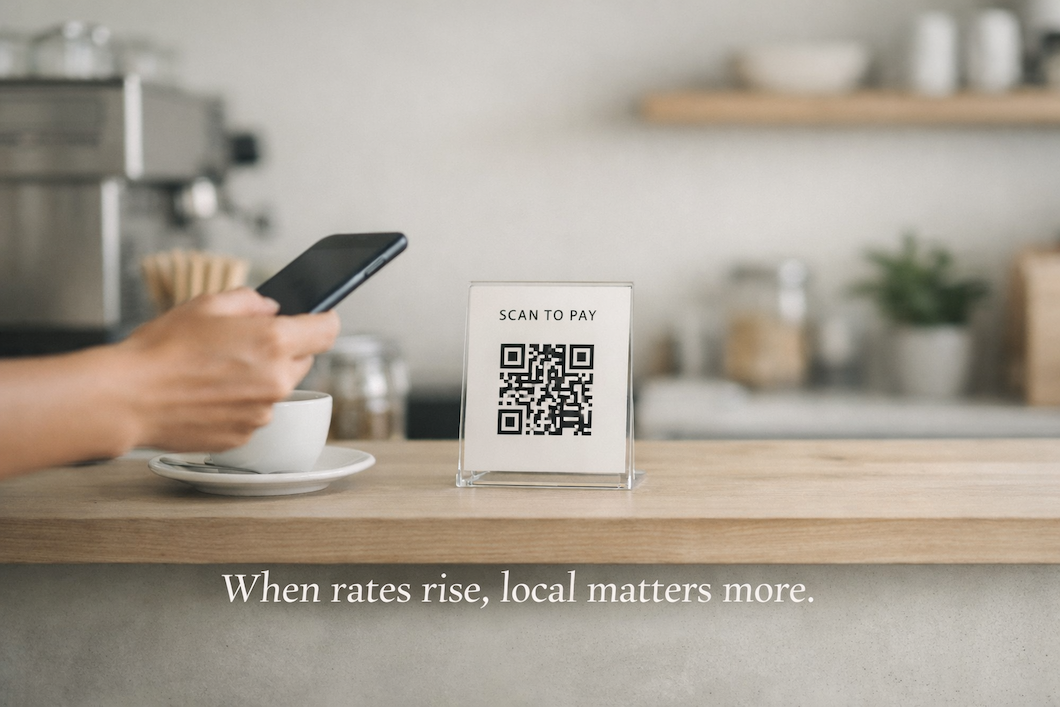
The RBA has lifted the cash rate to 3.85%. As budgets tighten, supporting local businesses matters more than ever for Australia’s economy and communities.
The Reserve Bank of Australia (RBA) has just lifted the cash rate by 0.25 percentage points to 3.85 per cent, responding to a renewed burst of inflation and ending the run of rate cuts we saw through 2025.
While this move is aimed at keeping inflation under control, it also tightens the screws on household budgets and small-business finances alike. That’s exactly why now is a critical moment for Australians to double down on supporting local businesses.
What the RBA decided last week
At its 3 February 2026 meeting, the RBA Board increased the cash rate target from 3.6 per cent to 3.85 per cent. The Bank noted that inflation picked up materially in the second half of 2025 and is expected to remain above the 2–3 per cent target band for some time.
Updated forecasts show underlying inflation staying above 3 per cent until at least early 2027, only drifting back toward the midpoint of the target range around mid-2028. In plain language, monetary policy is shifting back toward tightening to cool demand and prevent prices from running ahead of wages and productivity.
How the rate hike hits households and small businesses
Higher interest rates work by making money more expensive, slowing spending and investment across the economy.
For households, especially mortgage holders, the move to 3.85 per cent means higher monthly repayments and less disposable income for dining out, retail, and services.
Small businesses feel the pressure from the other side. Many rely on variable-rate loans, overdrafts, or home equity to fund operations. As interest costs rise, customer spending often falls at the same time. Industry analysts are already warning that this combination of weaker sales and higher finance costs could push up insolvency rates among SMEs through 2026.
Why supporting local matters more now
In this environment, local businesses face a three-way squeeze:
- higher borrowing costs
- rising input prices (rent, utilities, wages)
- softer consumer demand
When Australians choose to buy local instead of defaulting to global chains or offshore platforms, more of each dollar stays in the community—flowing into local wages, nearby suppliers, and reinvestment in suburbs and regions.
That circulation of money helps cushion the impact of tighter monetary policy. It keeps shopfronts open, apprentices employed, and local services available while the RBA does its job on inflation control. Think of local spending as a grassroots stabiliser that complements, rather than fights, interest-rate policy.
Practical ways Australians can support local businesses right now
Here are rate-hike-aware actions that make a real difference:
Re-allocate everyday spending
When budgets tighten, don’t cut local businesses first. Keep a slice of your weekly food, coffee, fitness, and entertainment spend with independent operators.
Choose local service providers
For tradies, real-estate agents, accountants, health practitioners, and consultants, look within your postcode and reward good service with repeat work.
Pay on time — or early
Higher rates strain cash flow. Prompt payment of invoices can be the difference between stability and closure for small businesses.
Use their digital channels
Many local businesses now rely on QR codes, tap-to-pay, and online booking links to reduce admin and speed up service. Scanning, booking, and paying digitally helps them operate more efficiently with fewer resources.
Amplify them online
Leave reviews, share posts, and tag local businesses on social media. In a slower economy, word of mouth and social proof become powerful, low-cost marketing tools.
A small choice that adds up
As the cash rate sits at 3.85 per cent and remains restrictive to bring inflation back under control, everyday decisions: at the counter, on our phones, and in how we pay-will play a big role in determining how well Australia’s local main streets come through this cycle.
Supporting local isn’t just a feel-good gesture. Right now, it’s an economic one.