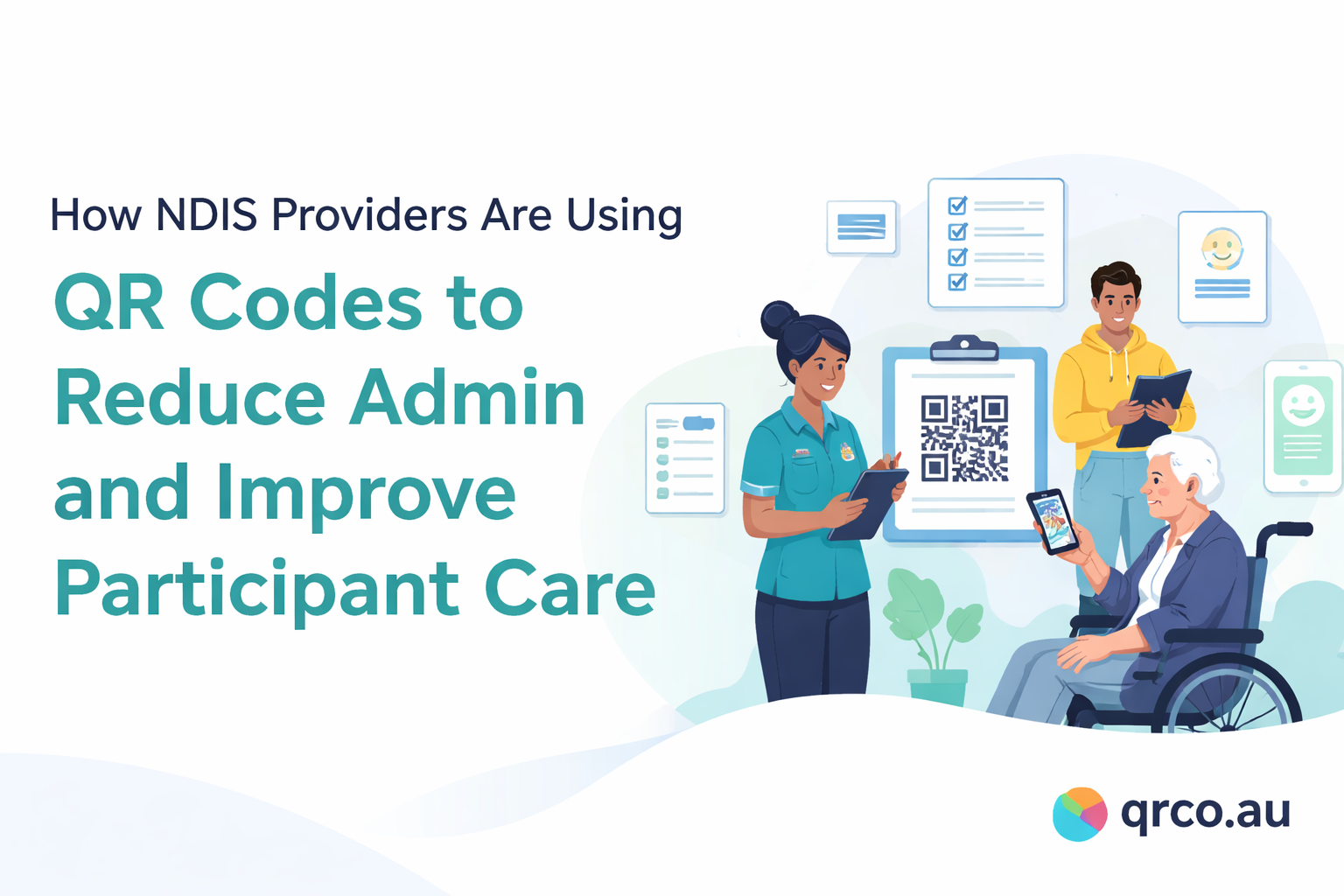
Discover how NDIS providers in Australia are using QR codes to streamline admin, improve compliance, and enhance participant experiences—without reprinting documents.
The Growing Admin Burden in NDIS Services
For many NDIS providers across Australia, administration is one of the biggest hidden costs of delivering high-quality care. From managing participant records and service agreements to ensuring staff compliance and collecting feedback, the workload adds up quickly.
At the same time, providers are expected to stay flexible, responsive, and compliant—often while operating across multiple locations or in the field.
This is where QR codes are quietly becoming a powerful operational tool.
Why QR Codes Are Gaining Traction in the NDIS Sector
QR codes are no longer just for restaurant menus—they’ve evolved into dynamic tools that bridge the gap between physical environments and digital systems.
For NDIS providers, they offer a simple way to give instant access to important information, without adding complexity for staff or participants.
Platforms like QRco.au, an Australian QR code management system, are making it even more practical by allowing providers to update QR code destinations without needing to reprint anything.
1. Streamlining Participant Check-In and Check-Out
Tracking attendance and service delivery is essential for compliance and accurate billing.
By placing QR codes at service locations or within participant environments, providers can enable:
- Quick check-in/check-out via mobile devices
- Accurate time tracking for support sessions
- Reduced paperwork and manual data entry
This not only saves time but also reduces the risk of human error.
2. Instant Access to Care Plans and Service Agreements
Support workers often need access to critical documents while in the field.
QR codes can link directly to:
- Participant care plans
- NDIS service agreements
- Risk assessments and support notes
Instead of searching through emails or systems, staff can simply scan and access what they need in seconds—improving both efficiency and quality of care.
3. Simplifying Staff Onboarding and Compliance
Onboarding new staff and keeping teams compliant is an ongoing challenge.
QR codes can be used to provide instant access to:
- Training materials and onboarding guides
- Compliance checklists
- Policy and procedure documents
Whether placed in offices, vehicles, or staff handbooks, QR codes ensure that the latest information is always available.
4. Capturing Feedback at the Point of Care
Collecting participant feedback is critical for continuous improvement—but often overlooked due to time constraints.
QR codes make it easy by linking directly to:
- Feedback forms
- Satisfaction surveys
- Incident reporting tools
Placed at key touchpoints, they encourage real-time feedback when experiences are still fresh.
5. Eliminating Outdated Materials
One of the biggest frustrations for providers is keeping printed materials up to date.
With dynamic QR codes:
- The QR code stays the same
- The destination (link, document, form) can be updated anytime
This means no reprinting, no outdated documents in circulation, and far less operational friction.
Why It Works for NDIS Providers
The NDIS environment is complex, mobile, and compliance-driven. QR codes fit naturally because they are:
- Simple to use for both staff and participants
- Cost-effective to implement at scale
- Flexible as services and requirements change
- Accessible across different devices and environments
When paired with an Australian-hosted platform like QRco.au, providers also benefit from local data handling and support.
The Bottom Line
QR codes are not just a convenience—they’re becoming a practical tool for reducing administrative overhead and improving service delivery in the NDIS sector.
For providers looking to streamline operations without adding new layers of complexity, they offer a low-cost, high-impact solution.
If you're exploring ways to modernise your workflows, QR codes might be one of the simplest upgrades you can make—without disrupting the systems you already have in place.