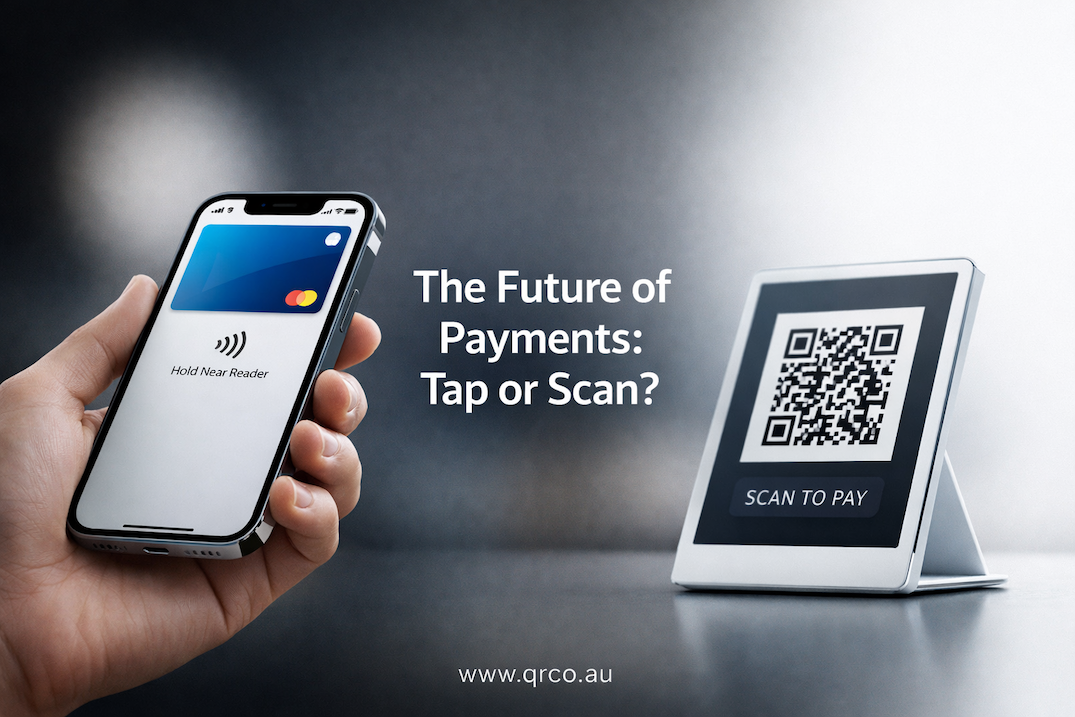
Australia’s payments landscape is under the microscope—and for good reason. As digital wallets steadily replace cash and even physical cards, policymakers are asking a critical question:
Who controls access to the future of payments?
At the centre of the debate is access to iPhone “tap-to-pay” technology (NFC), and what that means for competition, fees, innovation—and ultimately, Australian businesses.
What the Parliamentary Inquiry Is Examining
In late 2025, the House of Representatives Standing Committee on Economics launched an inquiry into “Schemes, Digital Wallets and Innovation in the Payments Sector.”
The inquiry:
- Was referred by the Treasurer
- Was adopted by the committee on 8 December 2025
- Held hearings in Canberra on 24–25 February 2026
The goal? To assess whether Australia’s payments regulation keeps pace with rapid innovation—particularly as mobile wallets, buy-now-pay-later (BNPL), and digital platforms reshape how Australians pay.
This isn’t just regulatory housekeeping. It’s about defining how competitive—and open—the next generation of payments infrastructure will be.
Why iPhone NFC Access Is the Flashpoint
The debate centres on access to the iPhone’s NFC chip—the hardware that enables contactless “tap” payments.
Australian Finance Industry Association (AFIA) and several banks argue that Apple effectively acts as a gatekeeper for contactless payments on iPhones. Because Apple controls NFC access, alternative wallet providers can’t freely build competing tap-to-pay solutions on iOS.
This raises concerns about:
- Competition between wallets
- Merchant fees
- Innovation speed
- Consumer choice
The issue isn’t new.
Back in 2017, the Australian Competition and Consumer Commission (ACCC) rejected a proposal from several banks seeking to collectively bargain with Apple Inc. for NFC access.
While the ACCC acknowledged that NFC access could increase competition and innovation, it ruled that the proposed collective negotiation carried potential anti-competitive risks that outweighed the benefits.
Nearly a decade later, the question is back—this time in a very different payments environment.
Why This Is Resurfacing Now
In September 2025, Parliament passed reforms expanding Australia’s payments regulatory framework.
The changes broadened the scope of the Reserve Bank of Australia (RBA) under the Payment Systems (Regulation) Act 1998 to explicitly include:
- Digital wallet providers
- Buy-now-pay-later services
- E-commerce payment platforms
- Card schemes
The RBA has indicated it plans to consult in mid-2026 on regulatory priorities under the amended framework, with mobile wallets specifically flagged as an area of focus.
The message is clear:
Digital wallets are no longer “just apps.” They’re core payments infrastructure.
And infrastructure attracts regulatory scrutiny.
Why This Matters to Australian SMEs
If you run a small or medium-sized business, you might be wondering:
How does NFC access policy affect me?
Here’s why it matters:
1️⃣ Fees and Merchant Economics
If competition between wallets increases, downward pressure on merchant fees could follow. If access remains tightly controlled, costs may remain influenced by a small number of platform providers.
2️⃣ Innovation Speed
Open access could enable:
- New wallet features
- Loyalty + payment integrations
- More flexible checkout experiences
Restricted access can slow ecosystem-level innovation.
3️⃣ Customer Experience Consistency
Businesses want frictionless checkout across:
- iPhone
- Android
- In-store
- Online
- In-app
Platform constraints can shape what’s possible—especially for tap-based flows.
Where QR Fits Into This Conversation
While NFC access is debated at the OS and hardware level, QR works differently.
QR-based experiences are:
- Cross-platform by default
- Camera + link driven
- Independent of wallet gatekeeping
- OS-neutral
That’s why QR remains strategically important—even as wallets evolve.
You can deploy QR for:
- Payments
- Ordering
- Table service
- Loyalty enrolment
- Receipts
- Product onboarding
- Event check-ins
And it works the same way on iPhone and Android.
For businesses designing customer journeys, this platform neutrality matters.
The Bigger Strategic Question
As regulators reshape payments oversight, businesses face a choice:
Do you build experiences dependent on platform-controlled infrastructure—or do you prioritise universal entry points?
NFC tap experiences can be powerful. But QR is universally accessible.
And in a landscape where policy and platform access are still evolving, universality is strategic.
What to Watch in 2026
- RBA consultation priorities
- Potential regulatory conditions on wallet providers
- Any mandated access frameworks
- Industry submissions from banks and fintechs
The outcome could shape Australia’s payments ecosystem for the next decade.
Final Takeaway
This isn’t just a policy debate about NFC chips.
It’s about:
- Competition
- Access
- Innovation
- Merchant economics
- Customer choice
For SMEs and product teams, the safest long-term strategy is building payment and engagement flows that work for every customer, every phone, every time.
🚀 Build Universal Customer Experiences with QRCO.au
If you’re designing payment, ordering, booking, or loyalty journeys that must work seamlessly across devices, QR remains the most universal entry point.
At QRCO.au, we help Australian businesses design QR-powered flows that are:
- Fast
- Frictionless
- Platform-neutral
- Future-ready
If you'd like help building a QR experience that complements wallet payments—or works independently of them—get in touch.
Let’s build something that works everywhere.