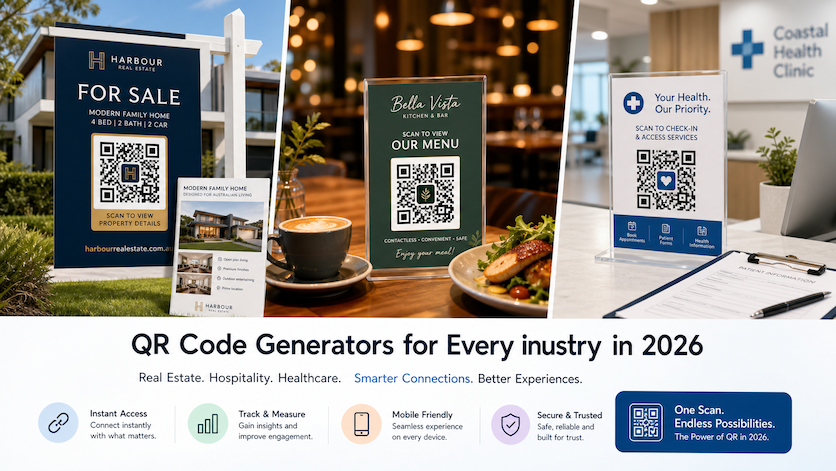
Stop using disposable links. Learn how to create free QR codes that rank and convert for your industry. Explore 2026 best practices for Real Estate boards, Restaurant menus, and Healthcare forms with QRco.au.
Introduction: Why "Free" Isn't Enough in 2026
A free QR code is easy to generate, but in 2026 the real advantage comes from a QR workflow that is secure, branded, editable, and built to convert. For real estate, hospitality, and healthcare, that means choosing a QR strategy that works after the code is printed, shared, or scanned in the real world.
1. Real Estate: Beyond the For-Sale Sign
Real estate teams need QR codes that can change without reprinting signs, brochures, or window posters. A dynamic QR code lets you update the destination URL when an inspection time changes, a property is sold, or a campaign needs a new landing page.
Best use cases:
- Listing boards.
- Open home flyers.
- Virtual tours.
- Digital disclosure documents.
Why it matters: A flexible QR system saves time and keeps every scan pointing to the right live page.
2. Hospitality: Menus That Sell
Hospitality is no longer just about contactless menus. Venues now use QR codes for ordering, reviews, loyalty offers, and repeat visits, which makes the code part of the sales funnel rather than just a utility.
Best use cases:
- Menu access.
- Table ordering.
- Google review prompts.
- Happy hour or loyalty campaigns.
Why it matters: A mobile-first landing page gives guests a fast path from scan to action, which is ideal for busy service environments.
3. Healthcare: Compliance and Trust
Healthcare QR codes need to feel official, secure, and easy to verify. Clinics and hospitals benefit from branded QR destinations and specialist contact cards that patients can save instantly.
Best use cases:
- Appointment forms.
- Patient information sheets.
- Specialist contact cards.
- Clinic check-in links.
Why it matters: Trust is a major part of the scan decision in healthcare, so the QR experience should look clean, local, and legitimate.
The 2026 checklist
Before you print or publish a QR code, check these essentials:
- Make sure the destination can be edited after launch.
- Use a branded, professional-looking design that matches your business.
- Download in a print-safe format such as SVG or PDF for offline use.
- Keep everything organized if you manage multiple locations, campaigns, or client accounts.
Why QRco.au fits
QRco.au is positioned well for Australian businesses that want a practical, local-first QR workflow with dynamic campaigns and business-friendly organization.
1. Real Estate: Beyond the "For Sale" Sign
Real estate agents are moving away from static codes. If a property is sold or the inspection time changes, you shouldn't have to reprint your boards.
- The Strategy: Use Dynamic QR Codes to update the destination URL without touching the physical sign.
- Pro Tip: Link your QR code to a Virtual Tour or Digital Disclosure Statement to capture leads instantly.
2. Hospitality: Menus that Sell
The "Contactless Menu" was just the beginning. In 2026, hospitality venues use QR codes for loyalty, reviews, and instant table ordering.
- The Strategy: Create a QR Code that points to a mobile-optimized menu.
- Pro Tip: Use Tracking Pixels (Facebook, Google, TikTok) on your landing pages to retarget diners with "Happy Hour" ads later that week.
3. Healthcare: Compliance and Trust
For clinics and hospitals, security is paramount. Patients need to trust that the code they are scanning is official and safe.
- The Strategy: Avoid "generic" generators that might inject ads. Use Branded Custom Domains so the URL the patient sees matches your clinic’s name.
- Pro Tip: Deploy Vcard QR Codes for specialists so patients can save contact details to their phones in one tap.